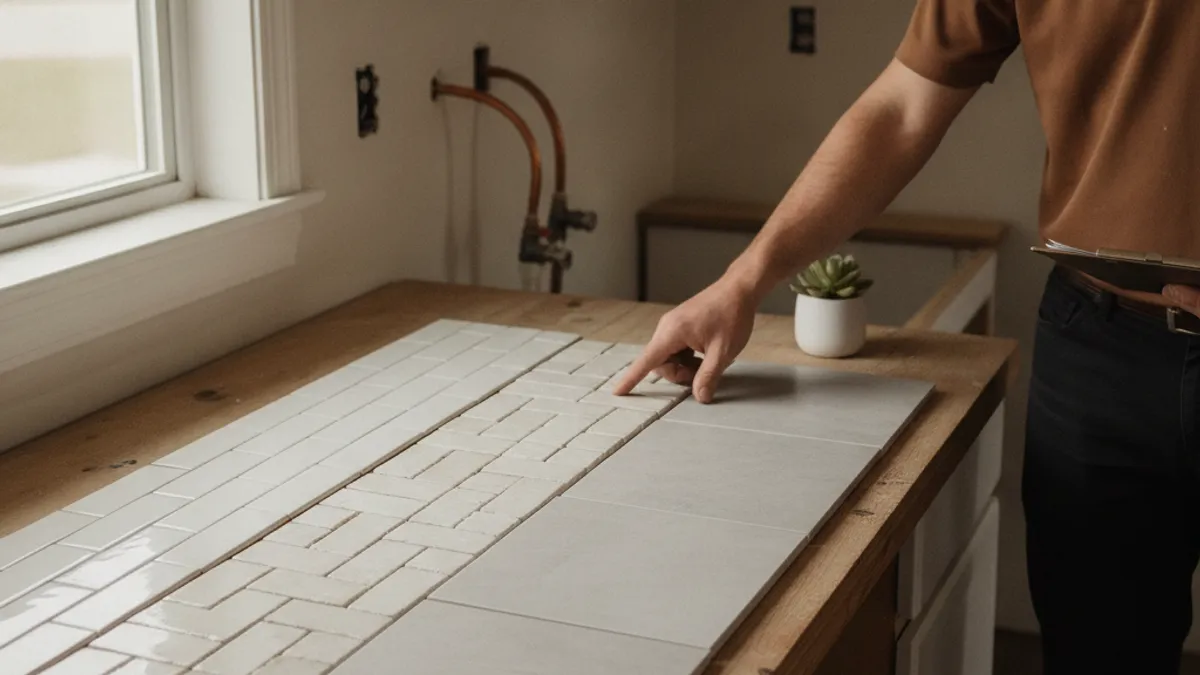
What actually drives a backsplash quote
A kitchen backsplash is one of the fastest, highest-impact updates you can make without a full remodel, and it is also one of the projects where the price spread between two quotes can look confusing if you do not know what to look for. Standard subway tile typically runs $1,200-$2,200 installed for an average kitchen. Mosaic, natural stone, or large-format porcelain panels run higher, typically $2,500-$4,500, depending on square footage and material.
Three things move the number most: the tile itself, the square footage being covered, and how much substrate prep the wall needs before tile can go up.
Cost by tile type
Standard subway tile in ceramic, usually 3x6 or 4x8 inches, remains the workhorse choice in Greater Topeka kitchens, running roughly $8-$14 per square foot installed, including labor. It is durable, easy to keep clean, and pairs with nearly any cabinet or counter color, which is part of why it stays popular year after year.
Mosaic tile, sold on mesh sheets in small individual pieces, runs $12-$22 per square foot installed. The labor cost is higher than subway because setting and grouting many small pieces takes more time per square foot than fewer larger tiles, even though the material itself is not always more expensive.
Zellige and other handmade-look ceramic tiles have become popular in Greater Topeka kitchens over the past few years for their slightly irregular, artisan finish. They run $18-$32 per square foot installed, reflecting both the material cost and the additional care needed to install tile with natural variation in size and thickness.
Large-format porcelain panels, sometimes a single slab covering most or all of the backsplash, run $20-$40 per square foot installed. Fewer grout lines make cleaning easier, but the panels are heavy and require precise substrate prep, which adds labor cost.
Natural stone, like marble subway tile or travertine, runs $15-$28 per square foot installed and needs sealing, similar to a granite countertop, to resist staining from cooking splatter.
How square footage changes the total
A standard kitchen backsplash, covering the wall space between counters and upper cabinets, typically runs 25-40 square feet depending on kitchen size and whether the backsplash extends to the ceiling behind a range hood, a popular upgrade that adds real visual impact and real square footage. A kitchen with a large window over the sink reduces total tile area but adds cutting complexity around the window frame, which can offset some of the square footage savings in labor.
If your remodel includes a kitchen island with a matching tile detail on the end panel, or a backsplash that wraps behind open shelving, add that square footage separately when comparing quotes, since some contractors quote only the primary wall run and treat additions as change orders later.
Substrate prep: the hidden cost driver
Tile needs a flat, clean, properly prepared surface to adhere to correctly, and this is where quotes can diverge the most. If your kitchen has existing tile that needs to come down first, that demo adds $3-$6 per square foot before new tile installation even starts. Older Central Topeka homes with original plaster walls sometimes need additional leveling compound before tile can be set flush, since plaster surfaces are rarely as uniformly flat as drywall.
We always recommend removing old tile rather than tiling directly over it, even when it is technically possible, since the finished result sits flush at outlets and cabinets and avoids trapping moisture between layers.
Pairing a backsplash with other work
Backsplash installation is one of the most common add-ons to a countertop installation or cabinet installation project, since scheduling both at once means one crew handles the transition where tile meets counter cleanly, rather than coordinating two separate contractors around the same seam. If you are already planning a countertop swap, ask about bundling the backsplash into the same visit. It typically saves on total labor cost compared to two separate service calls.
What to expect on install day
A standard subway tile backsplash typically takes 2-4 days from substrate prep through grouting and cleanup, depending on square footage and whether outlet and switch relocations are part of the scope. Large-format panels or intricate mosaic patterns can extend that timeline since the material itself requires more careful handling and cutting.
Grout needs to cure before the backsplash sees regular splashing and cleaning, so we recommend light use of the area, avoiding heavy scrubbing near fresh grout lines, for the first day or two after installation.
Grout color: a small choice with a real cost impact
Grout color affects both the finished look and the long-term maintenance of a backsplash, and it is worth deciding early rather than as an afterthought. Light grout on white subway tile gives a classic, bright look but shows staining faster in a busy kitchen, especially near the stove. Darker grout hides daily wear better and has become a popular pairing with white or light tile for exactly that reason. Epoxy grout costs more upfront than standard cementitious grout, typically an extra $1-$3 per square foot, but resists staining significantly better and does not need periodic sealing the way standard grout does. For a busy family kitchen, that upcharge often pays for itself in reduced maintenance over a few years.
What is trending in Greater Topeka kitchens right now
Subway tile in a herringbone or vertical stack pattern, rather than the traditional horizontal running bond, has become popular as a way to update the classic look without moving to a completely different material. Handmade-look zellige tile continues to gain ground in mid-to-high-end remodels for its texture and light-catching irregularity. Large-format porcelain slabs are increasingly popular behind ranges specifically, since fewer grout lines mean less grease buildup in a high-splatter zone. We bring current samples of each to every design consult so you can see what is actually trending against your own cabinet and counter choices, rather than relying on photos online that may not reflect current lead times or pricing.
How backsplash cost compares to other finish-level updates
For homeowners weighing where to spend a limited budget, a backsplash typically delivers strong visual impact for its cost relative to other finish-level updates. A $1,500-$2,500 backsplash update can meaningfully change how a kitchen feels, often rivaling the visual impact of a $5,000-plus kitchen flooring replacement, without the disruption of pulling appliances or living without a functional kitchen floor for several days. That makes it a common first step for homeowners planning a phased remodel who want an early, visible win.
Common backsplash cost questions
Is a full-height backsplash behind the range worth the extra cost?
Many homeowners find it is, both for the visual impact and for the practical benefit of easier cleaning behind the primary cooking surface, where grease and splatter concentrate most. It typically adds 15-25% to the total backsplash cost depending on the height of your upper cabinets.
Can I install backsplash tile myself to save money?
Basic subway tile in a small area is within reach for a confident DIYer, but outlet cutouts, corner transitions, and grout consistency are where amateur installs usually show. For a kitchen you are investing real money into otherwise, a clean professional install is usually worth the cost difference.
Does backsplash tile need to match the countertop material?
No, and mismatched materials are common and often intentional. A quartz counter with a contrasting ceramic or natural stone backsplash is one of the most popular combinations in Greater Topeka kitchens right now, since it lets each surface do a different visual job.
How long does a backsplash last before it needs replacing?
A well-installed tile backsplash with quality grout can easily last 20 years or more without needing replacement, since tile itself does not wear out the way flooring or laminate counters can. Most backsplash replacements happen because a homeowner is updating the overall kitchen look, not because the original tile failed.
The bottom line
A standard kitchen backsplash in Greater Topeka costs $1,200-$2,200 for subway tile and $2,500-$4,500 for mosaic, natural stone, or large-format porcelain. The real cost drivers are tile type, total square footage, and how much substrate prep the wall needs, especially in older homes with original plaster walls.
Call (785) 000-0000 for a free in-home consult. We bring tile samples so you can see them against your actual cabinets and counters before committing.